

Stack Bitcoin Privately Using This Tool
How to stop leaking your data to exchanges, and use Bitcoin as it was intended

When you buy Bitcoin on a centralized exchange, you are compromising your financial privacy more than you likely realize.
They are the most advertised and most convenient option, but the problem is that they require you to hand over personal data such as your passport/ID, bank details, a facial scan, and financial history. In some cases, they even require you to ‘verify’ your self-custody wallet address - all before you’re allowed to get even a single satoshi.
And now with the implementation of various crypto reporting regulations coming into force between 2025 and 2029, now is a good time to consider just how much of your personal data you are willing to give away.
In contrast, P2P (peer-to-peer) trading, which means buying directly from another person, has always been how Bitcoin was intended to work. It’s also the most private way to buy or sell Bitcoin available today.
A purely peer-to-peer version of electronic cash would allow online payments to be sent directly from one party to another without going through a financial institution. - Satoshi Nakamoto, The Bitcoin Whitepaper
Notice that the white paper explicitly states ‘…without going through a financial institution’. Bitcoin was never intended to be dominated by large, centralized exchanges.
This guide focuses on one specific P2P method that I think anyone can learn to use: RoboSats.
In this article:
Why P2P trading is the most private way to buy Bitcoin
The two ways to access RoboSats, and which one gives you full sovereignty
What RoboSats is and how it works
What you need before you start
CARF/DAC8/Form 1099-DA: new reporting rules that make this more urgent than ever
How anonymous RoboSats actually is (and where the weak points are)
The mechanics: hold invoices, fidelity bonds, premiums and time limits
A complete step-by-step walkthrough of a real transaction using Wise
Why Buy P2P Instead of Using an Exchange?
KYC, or Know Your Customer, might sound like a reasonable compliance step. After all, we are so used to handing over our ID and data to any number of government departments and institutions.
But consider what it means for you personally.
When you sign up for Coinbase, Kraken, or any regulated exchange, you hand over your passport or driver’s license, link a bank account, and submit a selfie. From that moment on, every Bitcoin purchase you make is logged against your identity. The exchange knows how much you own, when you bought it, and where it went afterward.
That data isn’t kept safely locked away. Exchanges have been subpoenaed by the IRS and SEC. Some major platforms have had data breaches that exposed customer identity documents to criminals. Others have frozen accounts without warning, often during times of market volatility when you might need access the most.
P2P trading cuts out the middleman entirely. You buy directly from another person. No exchange holds your funds, no corporate database stores your identity, and no compliance department can freeze your account.
Beyond that, new crypto reporting regulations, such as CARF, DAC8 and the US’s 1099-DA, have started taking effect since Jan 1, 2026. P2P falls outside the scope of their reporting requirements. More about these below.
The trade-offs of using P2P
There are some trade-offs, of course:
You will pay a premium over the spot price, though this varies widely depending on the currency, trade size, and payment method.
Trade sizes are smaller than on big exchanges. Robosats is best for small transactions; amounts between $100-$1,000 are common. I have seen offers up to $5,000.
The process takes more steps than just tapping “Buy” in an app. There is some friction, and the first couple of transactions will be a learning process. But for anyone who values financial independence, these are reasonable costs.
What Is RoboSats?
RoboSats is an open-source, peer-to-peer Bitcoin exchange built natively on the Lightning Network. It requires no sign-up, no email address, no phone number and no name. There is no persistent account of any kind.
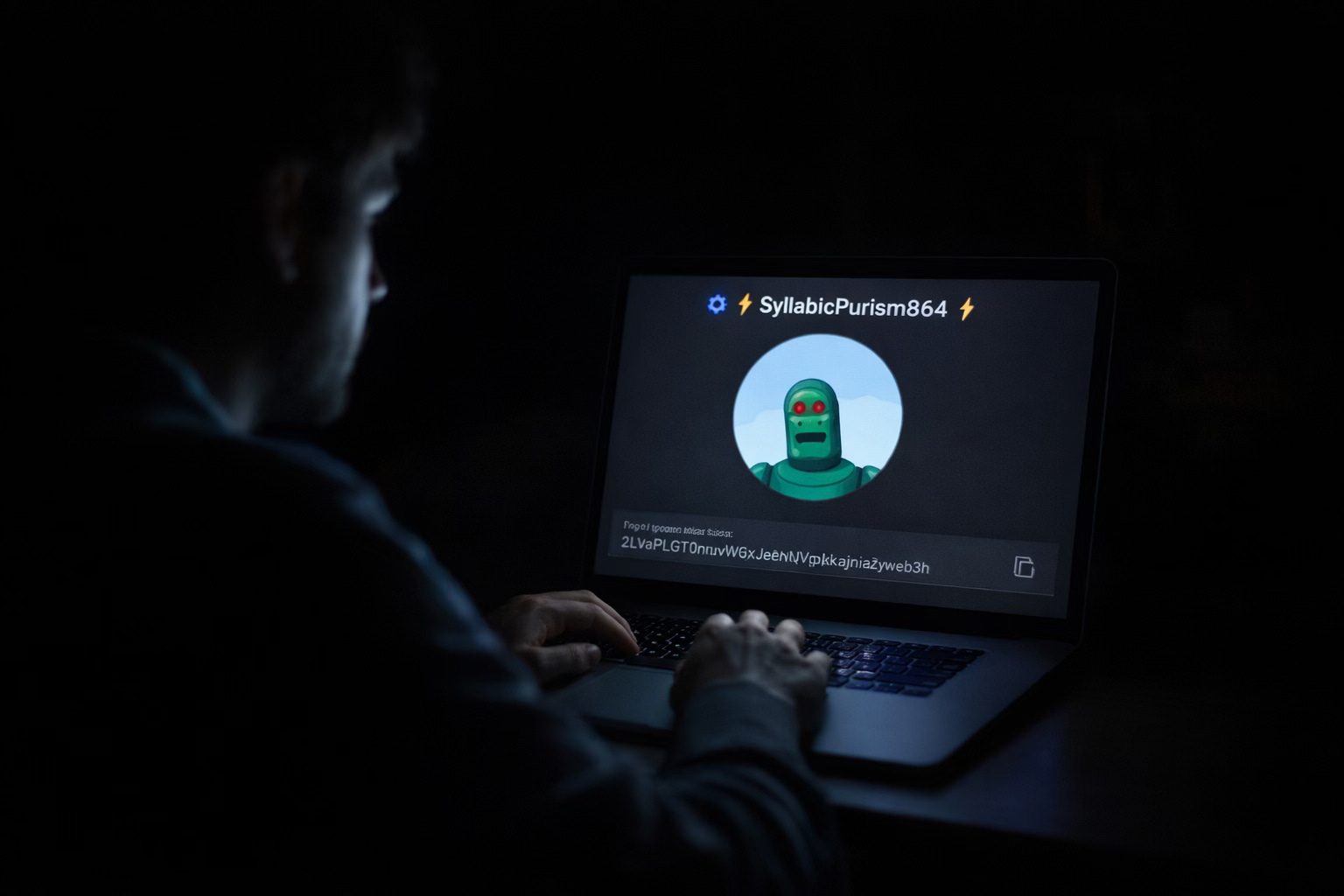
Each time you use RoboSats, you get a new robot identity, which is a randomly created avatar linked to a unique token. This token is the only way to access your session. When the trade is finished, the robot is retired. If you use a different robot for every trade, no one can link your transactions together.
The platform uses Tor by default. There is a clearnet URL, but it’s only for browsing. Never use it for live trading. Your IP address, transaction data, and identity should never be exposed to the clearnet during an active trade.
RoboSats also uses a federated model. Instead of one central server, several independent coordinators run their own instances. The order book you see combines offers from all of them. To shut down RoboSats, every coordinator would have to go offline simultaneously. This decentralized design is intentional.
Two Ways to Access RoboSats
There are two main access routes for Robosats. Note that you cannot access Robosats through a regular internet browser. You need to choose one of the following options.
Option A: Via Tor Browser (no node required)
Download Tor Browser, go to the RoboSats .onion address (available on the RoboSats website), and trade from there. This method works fine, and is how most people begin. The Bitcoin-side privacy is strong.
The downside is that you’re using a client app provided by someone else, so you have to trust their frontend code. You also rely on Tor Browser being available and working on your device.
Option B: Self-hosted on your node (Start9, Umbrel, Citadel)
Self-hosted is the method that I use. When RoboSats is installed on your Start9 node, the frontend is served directly from your own hardware. API calls to the coordinator are torified through your node’s Tor proxy automatically.
You don’t need Tor Browser on your local network. Load times are significantly faster, and you can access it from any browser while on your home network without additional configuration.
With Option A, you get convenience but have to trust a third party. With Option B, you need to own and run a node, which you probably already do if you’re reading this.
If you run a Start9 or similar, the self-hosted version is the clear choice. It gives you control at every step.
Is RoboSats Really Anonymous?
On the Bitcoin and Lightning side, RoboSats is as private as possible. There is no identity, no account, Tor routing by default, a new robot for every trade, and end-to-end encrypted chat between users. The coordinator can’t link your trades to your real identity, as long as you don’t share that information yourself.
The rest of this article is for paid subscribers only…
You may also like…
Bitcoin Was Built For Uncertain Times

Every major war in modern history has produced the same pattern: a small group of institutional winners and a much larger group of ordinary people left to absorb the economic consequences.
